
Only logged in customers who have purchased this product may leave a review.
Availability: Available immediately
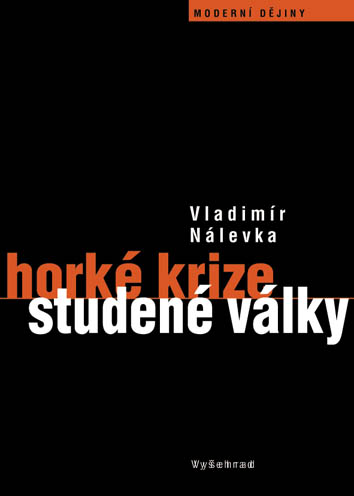
Horké krize studené války
Author: Vladimír Nálevka
5,44 €
Horké krize studené války focuses on moments when rivalry between the great powers escalated into immediate conflict. Vladimír Nálevka compares individual crises within the broader landscape of postwar relations, drawing in part on declassified archival sources.
Historian Vladimír Nálevka's Horké krize studené války examines periods when rivalry between the United States and the Soviet Union brought the world into exceptionally dangerous international crises. The author discusses the first Berlin crisis, the Korean War, the Suez Crisis, the Cuban Missile Crisis, and other Cold War conflicts. He places each event within the broader framework of postwar international relations and superpower confrontation. According to the publisher, the book draws substantially on declassified Soviet and North American archival sources.
Book information
- Author
- Vladimír Nálevka
- Publisher
- Albatros Media a.s.
- Imprint
- Vyšehrad
- Formát
- E-book
- Language
- Czech
- Genre
- história, moderné dejiny, studená vojna, medzinárodné vzťahy
- ISBN
- 978-80-742-9011-4
- Publication date
- 1. January 2010
- Pages
- 200
- Edition
- Moderní dějiny
- E-book formats
- EPUB (ISBN 978-80-742-9090-9) · PDF (ISBN 978-80-742-9089-3)
What is Horké krize studené války about?
The book focuses on critical moments in the Cold War when international tension erupted into open conflict or brought the world to the brink of a wider military confrontation.
Vladimír Nálevka examines the first Berlin crisis and the Soviet blockade of access routes to West Berlin, the war on the Korean Peninsula, the Suez Crisis, and the Cuban Missile Crisis of 1962. The book's broader scope also encompasses other local and proxy conflicts in which the geopolitical interests of the two major power blocs collided.
These events are not treated in isolation. The author places them within the development of international relations after World War II, tracing the alternation between confrontation and periods of relative relaxation. The book builds on Nálevka's earlier works on the Cold War and the Caribbean crisis.
Themes and motifs
The Cold War
The book examines international crises arising within the bipolar postwar world.
The United States and the Soviet Union
Geopolitical rivalry between the two main superpowers lies at the heart of the analysis.
The Berlin crises
The book explores conflicts surrounding divided Berlin and the postwar order in Europe.
The Korean War
The author analyzes the conflict on the Korean Peninsula in the context of rivalry between power blocs.
The Cuban Missile Crisis
One of the Cold War's most dangerous episodes forms a significant part of the book.
Setting
International relations and conflicts during the Cold War after World War II.
Who is this book for?
For readers interested in modern history, international relations, military history, and the Cold War.
Book context
A scholarly historical work by Vladimír Nálevka that builds on his books Studená válka and Karibská krize.
Otázky o knihe
What is Horké krize studené války about?
The book examines the Cold War's most dangerous international crises and conflicts within the broader rivalry between the United States and the Soviet Union.
Who wrote Horké krize studené války?
The author is Czech historian Vladimír Nálevka.
Which events does the book cover?
They include the Berlin crises, the Korean War, the Suez Crisis, the Cuban Missile Crisis, and other Cold War conflicts.
What sources did the author use?
According to the publisher, the book is largely based on declassified materials from Soviet and North American archives.
Is the book part of a publishing series?
Yes. Both Vyšehrad and library catalogs place it in the Moderní dějiny series.
How many pages does this edition have?
The source record for this product lists 200 pages.

Reviews
There are no reviews yet.