
Only logged in customers who have purchased this product may leave a review.
Availability: Available immediately
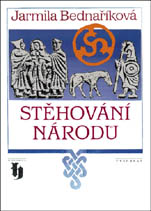
Stěhování národů
Author: Jarmila Bednaříková
7,92 €
Stěhování národů presents migration as part of a transformation across the European world. Jarmila Bednaříková connects the movement of peoples with changes in law, religion, and everyday life at the transition from antiquity to the early Middle Ages.
Historian Jarmila Bednaříková's Stěhování národů explores one of the pivotal periods of transformation in European history. The author traces the movements of Germanic and other ethnic groups, the breakdown of Roman structures, and the emergence of new political, social, and cultural conditions. She examines how different groups settled, alongside their social organization, law, religion, and daily lives. Drawing on scholarly literature and her own research, she places migration within Europe's broader transition from late antiquity to the early Middle Ages.
Book information
- Author
- Jarmila Bednaříková
- Publisher
- Albatros Media a.s.
- Imprint
- Vyšehrad
- Formát
- E-book
- Language
- Czech
- Genre
- história, svetové dejiny, neskorá antika, raný stredovek
- ISBN
- 978-80-702-1705-4
- Publication date
- 1. January 2007
- Pages
- 416
- Edition
- Historica
- E-book formats
- EPUB (ISBN 978-80-742-9110-4) · PDF (ISBN 978-80-742-9109-8)
What is Stěhování národů about?
The book examines the era traditionally known as the Migration Period, when Europe's political and ethnic map changed dramatically. Jarmila Bednaříková looks beyond the movement of tribes to explore the deeper social and cultural processes that accompanied migration.
Her account follows the gradual breakdown of Roman imperial structures, changes to economic and political systems, and the formation of new centers of power. Particular attention is given to Germanic groups: their settlement patterns, social and legal organization, religion, and everyday life.
The book combines scholarship from existing literature with the author's own research. An earlier edition also highlights the period's importance for the arrival of Slavic populations in the Bohemian Basin. Migration is thus presented as a complex transformation of the world between antiquity and the Middle Ages.
Themes and motifs
The Migration Period
The book centers on the major migrations that reshaped Europe at the end of antiquity and the beginning of the Middle Ages.
The Roman Empire
The author traces the breakdown of Western Roman structures and changes in the Roman political and economic system.
Germanic tribes
The book examines their migrations, settlement, social organization, law, and culture.
Late antiquity and the early Middle Ages
The period is presented as a fundamental transition between Europe's ancient and medieval orders.
Social and cultural change
Migration is placed within broader changes in religion, society, the economy, and everyday life.
Setting
Europe during late antiquity and the transition to the early Middle Ages.
Who is this book for?
For readers interested in world history, late antiquity, the early Middle Ages, migration history, and Germanic societies.
Book context
A work of accessible historical nonfiction by Jarmila Bednaříková. Vyšehrad has published several editions, including an expanded edition in 2026.
Otázky o knihe
What is Stěhování národů about?
The book explores the migrations of Germanic and other ethnic groups and Europe's social, political, and cultural changes between late antiquity and the early Middle Ages.
Who wrote Stěhování národů?
The author is Czech historian Jarmila Bednaříková.
Does the book also discuss the fall of the Roman Empire?
Yes. Its account includes the breakdown of Roman structures and the emergence of new power arrangements and social conditions.
Is Stěhování národů part of a publishing series?
Yes. Vyšehrad places the work in its Historica series.
Is product 31365 the same work?
Yes. It is a later edition of Jarmila Bednaříková's book with the same title but a different ISBN.
How many pages does this edition have?
The source record lists 416 pages.



Reviews
There are no reviews yet.