
Only logged in customers who have purchased this product may leave a review.
Availability: Available immediately
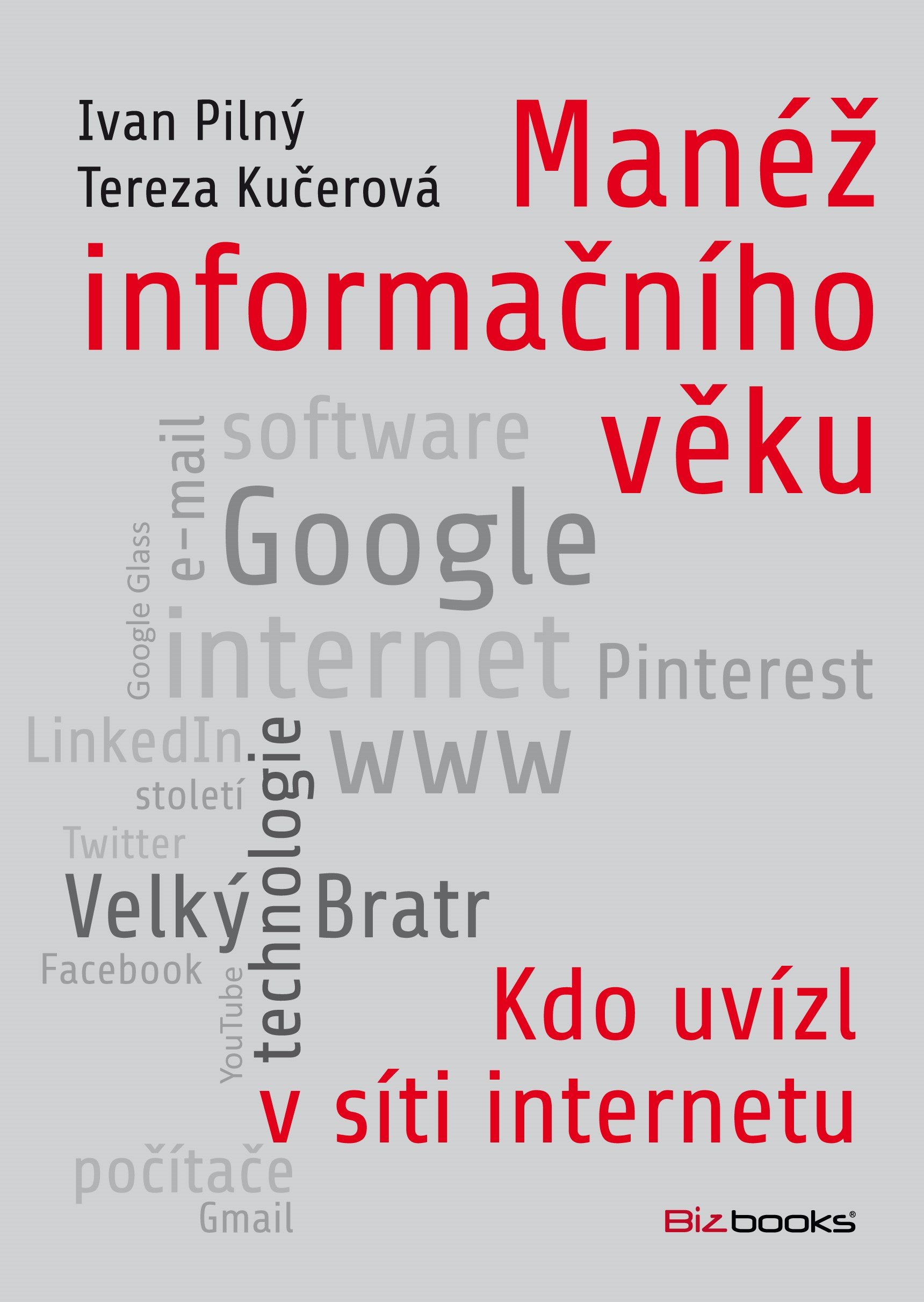
Manéž informačního věku
Author: Ivan Pilný, Tereza Kučerová
7,56 €
Manéž informačního věku by Ivan Pilný and Tereza Kučerová reflects on how digital technology and the internet are changing our relationship with information and everyday life. The authors ask whether the information age really gives us more useful information or simply vast amounts of data we cannot process. Rather than offering simple instructions, they raise topics for reflection, from virtual life and the digital divide to trust, security, and society's dependence on computer networks.
The book examines different aspects of life in a digital society. The authors consider whether unlimited access to data automatically makes us better informed and whether the human brain can cope with an ever-growing flow of information. They explore the digital divide between people with different levels of access to technology, ask whether virtual activities are replacing real life, and consider older adults' ability to use new digital tools. They also address the trustworthiness of the internet, cyber threats, and the dependence of countries and society on computer networks and critical applications. This is primarily a collection of reflections and questions about the information society rather than a technical manual.
A central thread is the distinction between having data available and being able to identify what matters. The book presents digital society as a setting shaped by personal habits and collective dependence on technology. Readers can relate its reflections to their own attention, trust, and the inclusion of people who are less at ease with digital tools.
Book themes
Information overload: The authors distinguish between the amount of available data and genuinely usable information.
The internet and everyday life: The book examines how digital environments affect the lifestyles of different age groups.
The digital divide: One question concerns inequality between people with different levels of access to the internet and technology.
Virtual and real life: The authors consider the extent to which digital activities replace physical and social experiences.
Trust on the internet: The book asks whom and what we can trust online.
Digital security: It also addresses the misuse of computer networks and society's dependence on critical digital systems.
Who the book is for
Readers interested in the information society, the internet, digital technology, and their social and psychological consequences.
Edition context
Manéž informačního věku, subtitled Kdo uvízl v síti internetu, was published by BizBooks in 2014. An external bibliographic record confirms Tereza Kučerová and Ivan Pilný as the authors, ISBN 978-80-265-0169-5, 232 pages, and a first edition.
Manéž informačního věku by Ivan Pilný and Tereza Kučerová reflects on how digital technology and the internet are changing our relationship with information and everyday life. The authors ask whether the information age really gives us more useful information or simply vast amounts of data we cannot process. Rather than offering simple instructions, they raise topics for reflection, from virtual life and the digital divide to trust, security, and society's dependence on computer networks.
Book information
- Author
- Ivan Pilný, Tereza Kučerová
- Publisher
- Albatros Media a.s.
- Imprint
- BizBooks
- Formát
- E-book
- Language
- Czech
- Genre
- Informačná spoločnosť, Internet, Digitálne technológie, Spoločenské vedy, Media and Communication
- ISBN
- 978-80-265-0169-5
- Publication date
- 1. January 2014
- Pages
- 232
- E-book formats
- EPUB (ISBN 978-80-265-0203-6) · PDF (ISBN 978-80-265-0202-9) · MOBI (ISBN 978-80-265-0204-3)
What is Manéž informačního věku about?
The book examines different aspects of life in a digital society. The authors consider whether unlimited access to data automatically makes us better informed and whether the human brain can cope with an ever-growing flow of information. They explore the digital divide between people with different levels of access to technology, ask whether virtual activities are replacing real life, and consider older adults' ability to use new digital tools. They also address the trustworthiness of the internet, cyber threats, and the dependence of countries and society on computer networks and critical applications. This is primarily a collection of reflections and questions about the information society rather than a technical manual.
A central thread is the distinction between having data available and being able to identify what matters. The book presents digital society as a setting shaped by personal habits and collective dependence on technology. Readers can relate its reflections to their own attention, trust, and the inclusion of people who are less at ease with digital tools.
Themes and motifs
Information overload
The authors distinguish between the amount of available data and genuinely usable information.
The internet and everyday life
The book examines how digital environments affect the lifestyles of different age groups.
The digital divide
One question concerns inequality between people with different levels of access to the internet and technology.
Virtual and real life
The authors consider the extent to which digital activities replace physical and social experiences.
Trust on the internet
The book asks whom and what we can trust online.
Digital security
It also addresses the misuse of computer networks and society's dependence on critical digital systems.
Who is this book for?
Readers interested in the information society, the internet, digital technology, and their social and psychological consequences.
Book context
Manéž informačního věku, subtitled Kdo uvízl v síti internetu, was published by BizBooks in 2014. An external bibliographic record confirms Tereza Kučerová and Ivan Pilný as the authors, ISBN 978-80-265-0169-5, 232 pages, and a first edition.
Otázky o knihe
What is Manéž informačního věku about?
The book collects reflections on the information society, the internet, digital technology, and their effects on individuals and society.
Who wrote Manéž informačního věku?
The authors are Ivan Pilný and Tereza Kučerová.
What is the book's subtitle?
An external bibliographic record gives the subtitle as Kdo uvízl v síti internetu.
Is the book a technical manual?
No. According to the publisher's description, the authors primarily offer topics and questions for reflection rather than technical instructions.
Does the book discuss internet security?
Yes. Its topics include digital threats, the misuse of computer networks, and whom or what to trust on the internet.
Does it also discuss older adults and technology?
Yes. One question is how older adults can learn to use new digital tools in ways that benefit them.
How many pages does the book have?
Both SOURCE_FACT and the external bibliographic record give 232 pages.
Does the book address older adults?
Yes, it raises questions about older adults' use of digital tools and differences in access to technology.



Reviews
There are no reviews yet.